
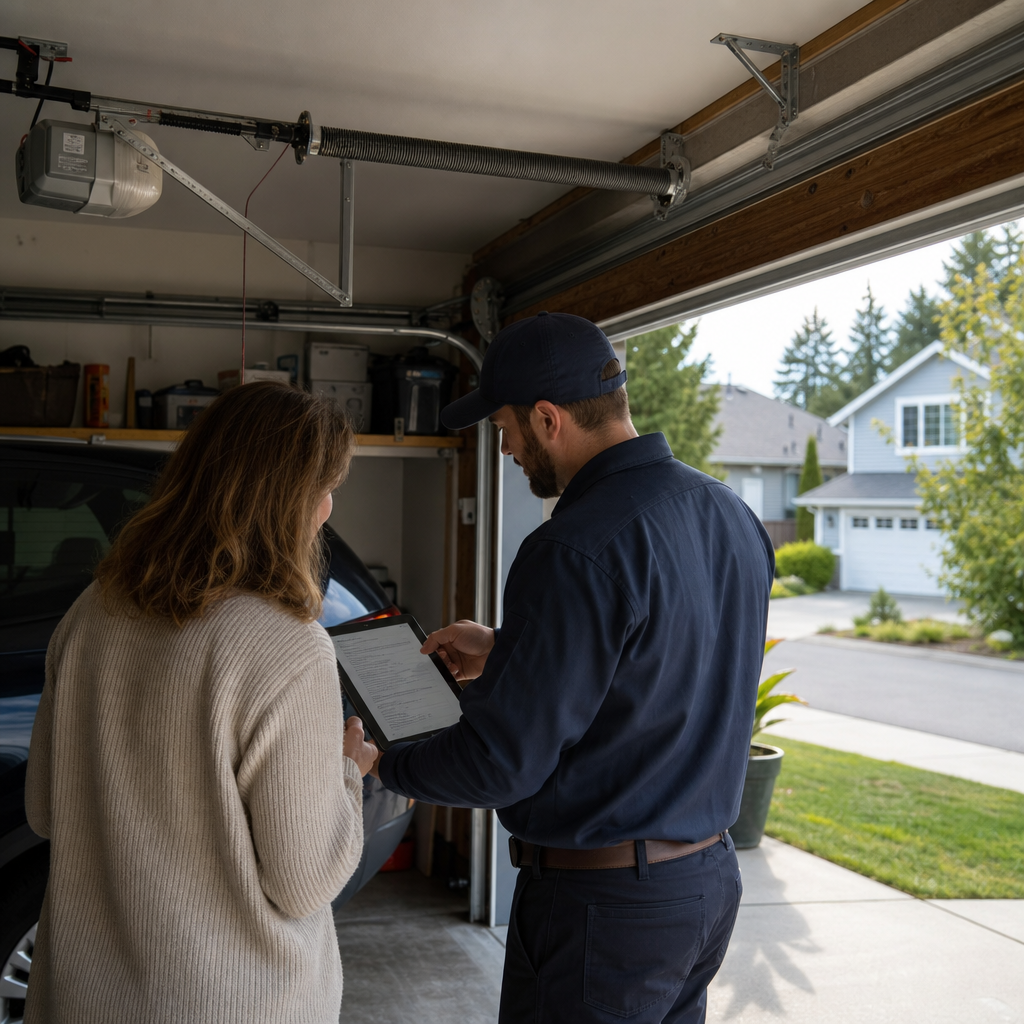
Garage Door Cable Replacement in Washington, WA — Same-Day Repair from $155
Garage door cable replacement in Washington typically runs $155–$295 and can usually be completed in a single visit when the technician carries the right gauge and length for your door. At Matrix Garage Door Repair Washington, we stock cables for all major brands and complete most replacements same day — call (844) 749-2402 for a free estimate and honest diagnosis of why the cable failed in the first place.
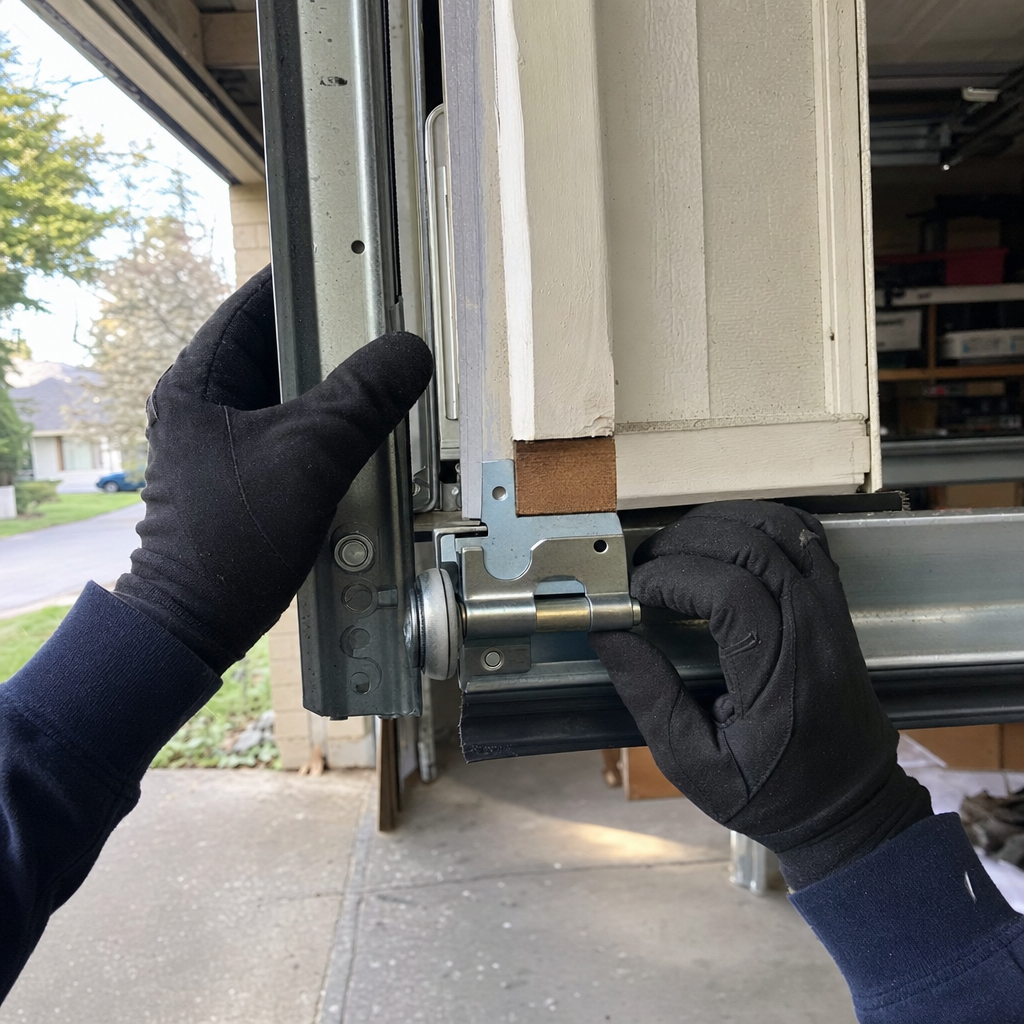
Washington’s marine climate does a number on garage door hardware. The salt-laden air rolling in from Puget Sound, combined with the persistent humidity that hangs over the Olympia Peninsula and the coastal valleys, corrodes steel cables from the inside out. We’ve pulled cables off doors in the South Capitol neighborhood that looked fine from three feet back but were frayed to half their strength where they wrapped around the drum — invisible until the tension found the weak point. That kind of premature failure isn’t normal wear; it’s environmental stress meeting a door system that wasn’t designed for it. Eight years of running calls across Washington has taught us to look past the obvious break and trace the actual load path.
If Your Cable Snapped, the Cable Isn’t the Problem
The cable is what got tired of doing a job the spring was supposed to be doing. That’s the pattern we see over and over on Washington homes, especially the mid-century ranches in Tumwater and the split-levels built during the 1980s housing boom around Lacey — doors that have been “repaired” three times by three different companies, each one swapping the cable and leaving the real culprit alone.
Here’s how the mechanics actually work: your garage door weighs somewhere between 130 and 400 pounds depending on size and material. The torsion spring (or extension spring pair) is engineered to bear nearly all of that load. The cables transfer the spring’s controlled tension to the bottom brackets of the door, and the drums at each end of the spring shaft manage how that cable pays out and winds back as the door moves. When a spring weakens — loses tension through metal fatigue, improper initial winding, or just age — the cables start picking up slack load they were never meant to carry. They fray at the drum grooves. They stretch unevenly. Eventually one snaps, often at the worst possible moment.
We’ve also seen drum misalignment cause cable failure on doors that otherwise had healthy springs. A drum shifts slightly on the shaft — maybe from a previous technician over-torquing the set screws, maybe from the shaft itself developing a slight bow — and the cable starts spooling onto the drum at an angle. That creates a sawing action against the drum flange. The cable looks like it failed from age; actually, it was being cut by its own hardware.
Joseph Taylor personally leads every job, and his first step on a cable call isn’t reaching for a replacement spool. It’s checking spring tension with a winding bar, inspecting drum alignment, and testing whether the door is properly balanced with the opener disconnected. Replace a cable on a door with a fatigued spring and you’re writing a warranty check for yourself in six months. We don’t work that way.
What Actually Causes Cables to Fail Early in Washington
Competitor pages list “wear and tear” and move on. Here’s what we’ve found matters in this specific market:
- Internal corrosion from humidity: Washington’s average relative humidity sits above 75% for much of the year. Galvanized cable coatings eventually micro-crack, and moisture wicks into the wire core. The cable swells slightly, flexes differently, and fatigues faster — all hidden until failure.
- Salt air acceleration: Homes within a few miles of the coast, or anywhere the marine layer pushes inland, see corrosion rates we’d expect in much older installations. We’ve replaced 4-year-old cables in the Delphi area that looked like decade-old hardware from drier climates.
- Spring-tension mismatch: A spring wound too tight over-tensions cables; too loose, and cables slap and abrade. Both conditions show up as premature cable wear. The “right” spring for a door depends on accurate weight measurement, not door size alone.
- Drum damage from previous repairs: Technicians in a hurry reuse drums with grooved or chipped flanges. The new cable rides the same damaged surface and fails the same way.
- Wrong cable gauge: Heavier doors need thicker cables (typically 1/8″ or 5/32″ for residential; some commercial-grade Clopay and Amarr setups need 3/16″). A thinner cable saves a few dollars upfront and costs a callback.
We carry multiple gauges and pre-cut lengths for the eight major brands we service — Chamberlain, Genie, Clopay, Amarr, and the full line including LiftMaster, Wayne Dalton, Craftsman, and Raynor. That inventory means the repair happens today, not after a parts order and a second appointment window.
Torsion vs. Extension Systems: Different Cables, Different Diagnostic Paths
Not all “garage door cables” are the same, and the repair approach differs significantly.
Torsion systems — the most common setup in Washington homes built since the 1990s — use a single spring (or paired springs) mounted horizontally above the door. Cables attach to bottom brackets, run vertically to pulley-like drums at each end of the spring shaft, and wind/unwind as the door moves. When we replace cables on a torsion system, we’re also verifying drum alignment, checking for shaft deflection, and confirming the spring’s active coils haven’t begun to separate or develop gaps. The drum alignment step alone prevents the sawing failure pattern described above.
Extension systems — still found on many older homes in the Eastside and Westside historic districts — use springs stretched parallel to the horizontal tracks. Cables run through a pulley system, and critically, there’s a safety cable running through the center of each extension spring. That safety cable is what contains the spring if it breaks, preventing it from launching across the garage. We’ve found safety cables omitted, improperly routed, or rusted through on inspection calls where the homeowner didn’t even know they existed. We check and replace these as part of any extension-system cable service; skipping them isn’t an option.
The distinction matters for pricing too. Extension system cable replacement sometimes involves more hardware (pulleys, safety cables, additional fasteners) and can run toward the higher end of our range. Torsion system cable replacement is typically more straightforward when the spring and drums are healthy — but more involved when they’re not, since we’re addressing the root cause, not just the symptom.
What Should You Check Before Calling?
We’re not going to tell you to fix this yourself. A garage door cable under tension stores significant energy, and a snapped cable can whip with enough force to damage the door, the garage interior, or anyone in its path. Joseph has seen the aftermath of homeowner attempts — bent tracks, destroyed bottom brackets, and worse. If the door is stuck open, partially open, or you can see a loose cable hanging, keep people and pets away from the door and call a professional.
That said, here are the observable symptoms that help us prepare for your call:
- One side of the door hangs lower than the other when closed — suggests a single cable failure
- Door opens crooked or binds in the tracks — cable length mismatch or drum slippage
- Visible fraying, rust blooming, or broken strands anywhere along the cable run
- Loud bang from the garage, then door won’t move — classic cable snap, often following spring failure
- Cable has come off the drum but appears intact — possible drum misalignment or spring tension issue
Describing what you see helps us bring the right parts and tools, but we don’t diagnose over the phone. The actual condition of the spring, drums, and bearings only reveals itself with the door unloaded and inspected.
Garage Door Cable Replacement Cost in Washington
Our pricing is straightforward and based on what the job actually requires. The table below shows our standard cable-related services and ranges. Every estimate is free and provided on-site before work begins.
| Service | Price Range |
|---|---|
| Cable Repair / Replacement | $155 – $295 |
| Spring Repair (often needed with cable failure) | $210 – $400 |
| Track Realignment (if cable came off due to drum/shift) | $140 – $285 |
| Roller Replacement (frequently worn on same doors) | $130 – $260 |
| Opener Repair (if opener strained against unbalanced door) | $140 – $380 |
| Full Garage Door Repair (multi-component issues) | $175 – $710 |
Factors that push a cable job toward the higher end: extension system with safety cable replacement, heavy or oversized doors requiring thicker gauge cable, drum replacement or shaft straightening, and doors with significant rust on bottom brackets or hardware that needs cleaning and reassembly. We explain exactly where your job falls before starting work — no surprises, no pressure.
Need a specific part? We source and stock Garage Door Parts in Washington for all major brands, including cables, drums, springs, and hardware kits for Clopay, Amarr, and other leading manufacturers.
Why the Owner-Operator Model Matters for Cable Repair
There’s a practical difference between calling a dispatcher who routes to the next available subcontractor and calling a technician who owns the business, carries the inventory, and writes the warranty.
Joseph Taylor is both. When you call Matrix Garage Door Repair Washington, you’re speaking with the person who will assess your door, select the correct cable gauge and length for your specific brand and door weight, and stand behind the work. Our home page has more about our full service range, but the point here is specific: cable replacement done wrong — wrong gauge, wrong drum alignment, unaddressed spring fatigue — fails again, often faster than the first time.
Nearly 600 customers have rated us 4.8 stars. That volume matters because it represents consistency across hundreds of different door configurations, age conditions, and repair scenarios. A handful of reviews could be luck. Nearly 600 is a pattern.
We work on your brand — Chamberlain, Genie, Clopay, Amarr, and the full eight-brand range — which means no guesswork on cable compatibility, drum geometry, or spring specification. Whether it’s a broken spring at 7 a.m. or a new door installation you’ve been planning for months, the same person answers the call and owns the outcome.
FAQs
Garage door cable replacement in Washington typically costs between $155 and $295, including parts and labor. The exact price depends on your door system type (torsion or extension), cable gauge required, and whether related components like springs or drums also need attention. Call (844) 749-2402 for a free on-site estimate — we’ll diagnose the full system, not just swap the visible broken part.
Yes, we complete most cable replacements same day because we stock cables in multiple gauges and lengths for all major brands. Joseph Taylor carries inventory for LiftMaster, Chamberlain, Genie, Clopay, Amarr, Wayne Dalton, Craftsman, and Raynor systems, so we don’t need to order parts and reschedule. Same-day service depends on call volume and your location within our Washington service area — early morning calls typically secure same-day slots.
Cable “repair” in the sense of splicing or reattaching a frayed cable isn’t safe or code-compliant — replacement is the only proper option. The real cost decision is whether to replace just the cable or address the underlying cause (spring fatigue, drum misalignment, worn hardware) that led to premature failure. Replacing only the cable when the spring is failing costs less today but significantly more within months. We price both scenarios upfront so you can decide with full information.
We don’t recommend it. Garage door cables operate under extreme tension — a snapped cable can whip with lethal force, and working near a loaded torsion spring without proper winding bars and training risks serious injury. Joseph has responded to calls where DIY attempts bent tracks, destroyed bottom brackets, or caused personal injury. The diagnostic step — determining why the cable failed — also requires unloaded inspection and specialized tools. This is a trained-technician repair, not a weekend project.
Ready to Get Your Door Moving Safely Again?
A snapped or frayed cable isn’t just a door problem — it’s a sign the load-bearing system needs proper diagnosis. Joseph Taylor and the team at Matrix Garage Door Repair Washington will trace the actual cause, replace what needs replacing with the right parts for your brand, and get your door balanced and safe. Call (844) 749-2402 now for a free estimate and same-day service across Washington. If the door’s giving you trouble, there’s a reason — let’s find it and fix it right the first time.
Written by Joseph Taylor, Owner & Lead Technician at Matrix Garage Door Repair Washington, serving Washington, WA.