
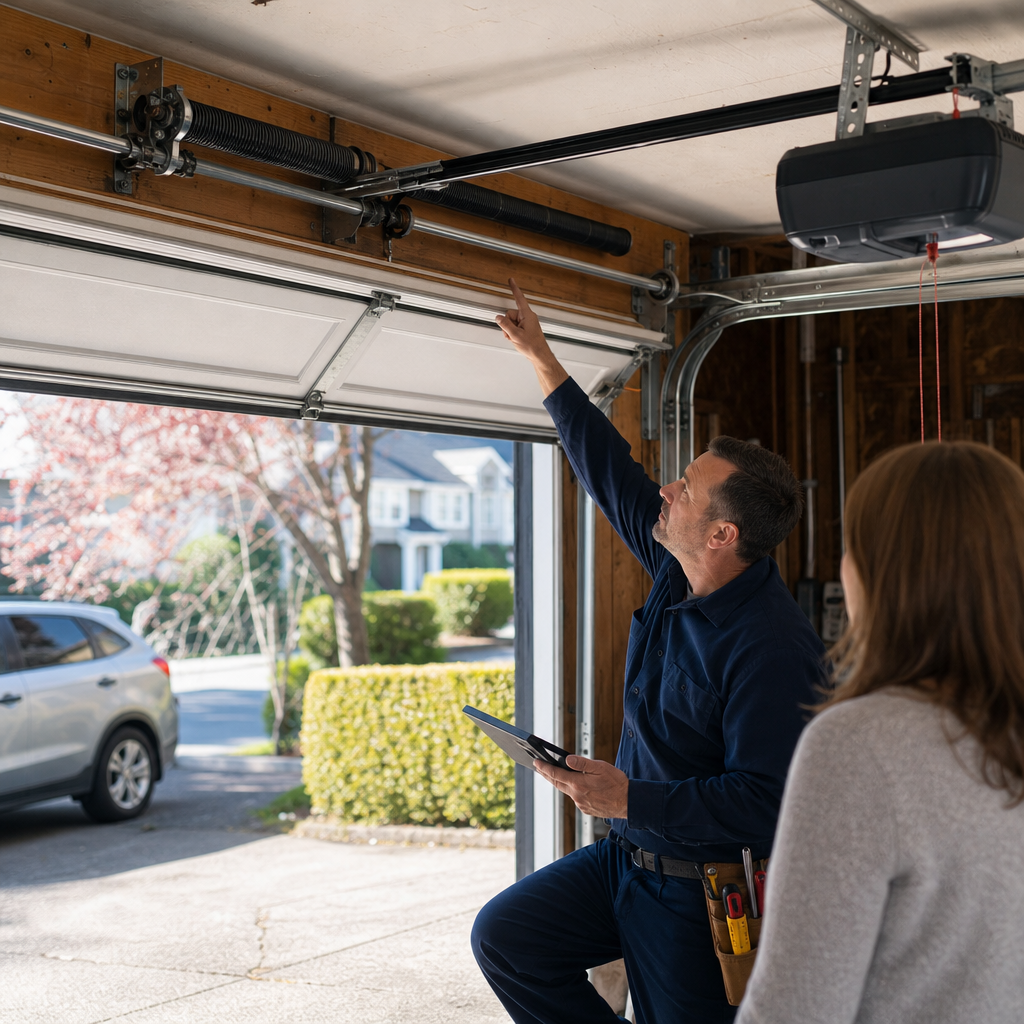
Why Your Garage Door Won’t Close in Washington, WA — and What to Do Next
A garage door that won’t close is most often caused by misaligned safety sensors, a dead remote battery, or a broken spring — and knowing which one you’re dealing with determines whether you can fix it in five minutes or need to stop using the door immediately. In Washington, where afternoon sun angles and seasonal humidity create unique problems for west-facing garages and older wood doors, the symptom looks the same but the cause changes. If your door refuses to close and you’re not sure why, call us at (844) 749-2402 — we’ll walk you through a quick diagnostic over the phone, and if you need us out, we’re usually there same day.
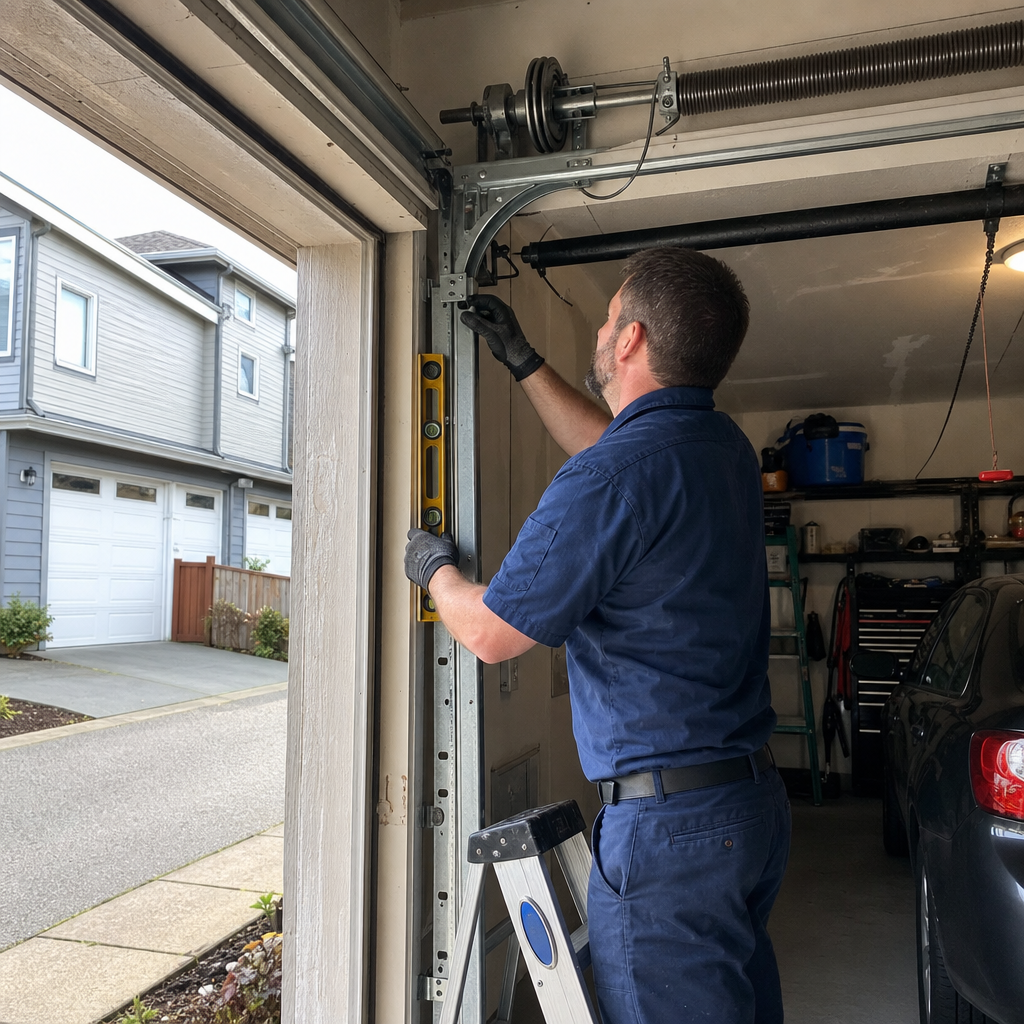
We’ve spent eight years running calls across Washington, from the older homes near the Capitol Campus in Olympia to new construction that somehow still gets the install wrong. The door that’s been “fixed” three times before we show up? That’s not rare. What we’ve learned is that homeowners waste time and money when they treat every won’t-close problem the same way. The actual value is matching your symptom to the right response category — some causes are safe to troubleshoot yourself, some will make things worse, and one is a genuine safety situation where continued operation risks serious injury.
The Three Response Categories Every Washington Homeowner Should Know
Here’s how we sort it on every service call. Use this to decide your next move before you touch anything.
DIY-Safe: Sensor Alignment, Remote Battery, Wall Button Wiring
These three account for roughly half the won’t-close calls we field in Washington, and they’re all safe to check yourself.
Safety sensors sit six inches off the floor on either side of your door track. They transmit a 9V DC infrared beam — when something breaks that beam, the opener reverses or refuses to close. First, make sure nothing’s blocking the path: leaves, spider webs, a stray shovel. Then check alignment: both sensor housings should face each other directly, with their indicator lights steady (not blinking). A blinking light means misalignment.
Here’s the Washington-specific detail competitors miss: on west-facing garages, direct afternoon sunlight can blind the receiving sensor at certain times of year. The door won’t close at 4 p.m. but works fine after sunset. If this sounds familiar, tape a small cardboard hood over the receiver to block the sun — or swap the sensor positions so the transmitter faces west instead.
Remote battery is obvious but overlooked. If the wall button closes the door but the remote doesn’t, replace the coin cell. If neither works, the problem is upstream.
Wall button wiring can fail where the low-voltage bell wire staples to the wall — we’ve found rodent damage, corrosion from humidity, and amateur splices that failed. Twist the wire gently at the button and opener head; if the door responds intermittently, you’ve found your break.
Call a Technician: Limit Switch, Logic Board, Trolley Carriage
These problems require tools, parts knowledge, and safety awareness. You won’t make anything worse by leaving them alone, but you probably won’t fix them without experience.
The limit switch tells the opener how far to travel. When it drifts, the door thinks it’s fully closed when it’s still six inches up, or it hits the floor and reverses hard. Adjusting limits on modern openers means entering programming mode — easy to botch if you don’t know your model’s sequence.
Logic board failures show up after power surges or simply age. If your LiftMaster or Chamberlain wall button blinks a specific number of times when you press it, that’s not random — it’s a fault code. Count the blinks:
- 1 blink: Safety sensor wire disconnected or shorted
- 2 blinks: Sensor wire shorted or black/white wires reversed
- 4 blinks: Sensor eyes slightly misaligned
- 5 blinks: Motor overheated or RPM sensor failure
Knowing this resolves half our no-close calls without a truck roll. If you’re seeing consistent blink counts, call us with the number — we’ll tell you if it’s a trip charge or a conversation.
The trolley carriage connects the opener arm to the door. When it cracks or the emergency release gets pulled and not re-engaged properly, the motor runs but the door doesn’t move. We’ve found carriages held together with zip ties from previous “repairs.” Joseph Taylor personally leads every job, and he’s got stories about what passes for a fix.
Stop Operating Immediately: Broken Spring, Snapped Cable, Bent Track Under Load
This is the category that matters. A garage door won’t close because the spring is broken is not a troubleshooting situation — it’s a stop-what-you’re-doing situation.
Here’s how to tell: look at the spring above your door (torsion spring, horizontal tube) or the stretched springs along the side (extension springs). If one side of the door sits visibly lower than the other, or the spring has a gap in its coils, the door is being held up by the cable and opener alone. The opener isn’t designed to bear that weight. Every time you hit the button, you’re stressing the cable and risking snap or sudden door drop. We’ve seen 150-pound doors come down on cars, bikes, and once a very surprised golden retriever.
Snapped cables and bent tracks under load present similarly — the door hangs crooked, binds, or reverses immediately. Don’t force it. Don’t use the emergency release and try to lower it manually. The energy stored in a loaded door system doesn’t care about your schedule.
If the door’s giving you trouble, there’s a reason — let’s find it and fix it right the first time.
Washington’s Seasonal Factor: When Humidity Swells Your Door Shut
Here’s something we see every August through October in Washington that no generic troubleshooting page mentions: high humidity swells wood door panels enough to contact the frame or floor seal unevenly. The opener detects this resistance as an obstruction and reverses.
Homeowners in older Washington homes — especially pre-1980 construction with original wood doors — call us convinced their opener failed. The opener didn’t fail. The door grew by an eighth of an inch, and the safety force setting is doing exactly what it’s designed to do. We adjust the travel and force limits, plane the door edge if needed, or recommend a steel replacement if this is the third seasonal call. In newer construction with Clopay or Amarr steel doors, this doesn’t happen — but we’ve seen plenty of new installs with header framing that’s out of square, creating the same symptom.
If your door worked fine in June and won’t close in September, and you’ve got a wood panel door, humidity is your prime suspect before you spend money on an opener diagnostic.
What Garage Door Won’t Close Repairs Cost in Washington
Most won’t-close situations fall into one of these repair categories. Here’s what we charge in the Washington market — no hidden fees, no upsell once we’re on site:
| Repair Type | Typical Range |
|---|---|
| Sensor realignment / wiring fix | $140–$285 |
| Spring repair (torsion or extension) | $210–$400 |
| Cable repair | $155–$295 |
| Opener repair (logic board, limit switch, carriage) | $140–$380 |
| Track realignment | $140–$285 |
| Full opener replacement | $295–$650 |
The total range for most Garage Door Repair calls that start with “won’t close” runs $175–$710, depending on what we find. We quote upfront after diagnosis, not before we know what we’re dealing with. Estimates are free — call (844) 749-2402 and we’ll give you a straight answer.
When to Call Joseph Taylor vs. Keep Troubleshooting
We’re not interested in charging you for a dead battery you could swap yourself. Here’s our honest breakdown:
Keep troubleshooting if: the door reverses only sometimes, the remote stopped working first, or you can see an obvious obstruction. Check the sensor lights, swap the remote battery, look for sun interference. These five minutes save everyone time.
Call us now if: the door won’t close AND the spring looks uneven, one side hangs lower, you heard a loud bang from the garage earlier, or the wall button blinks consistently and you don’t recognize the code. These are not user-serviceable problems, and continued attempts risk making the repair more expensive — or dangerous.
Joseph Taylor serves as both owner and lead technician at Matrix Garage Door Repair Washington. Nearly 600 customers have rated us 4.8 stars, and that volume matters — it means consistency across hundreds of actual jobs, not a handful of cherry-picked testimonials. We work on your brand: LiftMaster, Chamberlain, Genie, Clopay, and the full list of major manufacturers. Whether it’s a broken spring at 7 a.m. or a door that’s been swelling shut since Labor Day, 8 years of one specialty means we’ve seen it and fixed it.
FAQs
Most repairs run between $175 and $710, with sensor and wiring fixes at the lower end and spring or opener replacements toward the top. We diagnose first and quote upfront — call (844) 749-2402 for a free estimate.
Direct sunlight is blinding your safety sensor’s receiver, breaking the infrared beam. This is common on west-facing Washington garages in late summer and fall. Try shading the receiver or swapping sensor positions — if that doesn’t resolve it, we’ll realign the system properly.
Opener repair typically costs $140–$380, while replacement runs $295–$650. If your opener is under 10 years old and the motor runs normally, repair usually makes sense. If it’s older, noisy, or lacks modern safety features, replacement is the better long-term value. We carry LiftMaster and Chamberlain units and can install same-day if needed.
Yes — we offer same-day service for urgent situations, especially safety issues like broken springs or doors stuck open. Emergency garage door service is built into our core offering, not an upsell. Call (844) 749-2402 and we’ll prioritize based on safety risk.
Ready to Get Your Door Closing Again?
If you’d rather have it looked at, Matrix Garage Door Repair Washington offers a no-pressure assessment in Washington — call (844) 749-2402. Joseph Taylor will take your call, walk through what you’re seeing, and if you need us out, we’ll be there with the right parts and no guesswork.
Written by Joseph Taylor, Owner & Lead Technician at Matrix Garage Door Repair Washington, serving Washington, WA.