
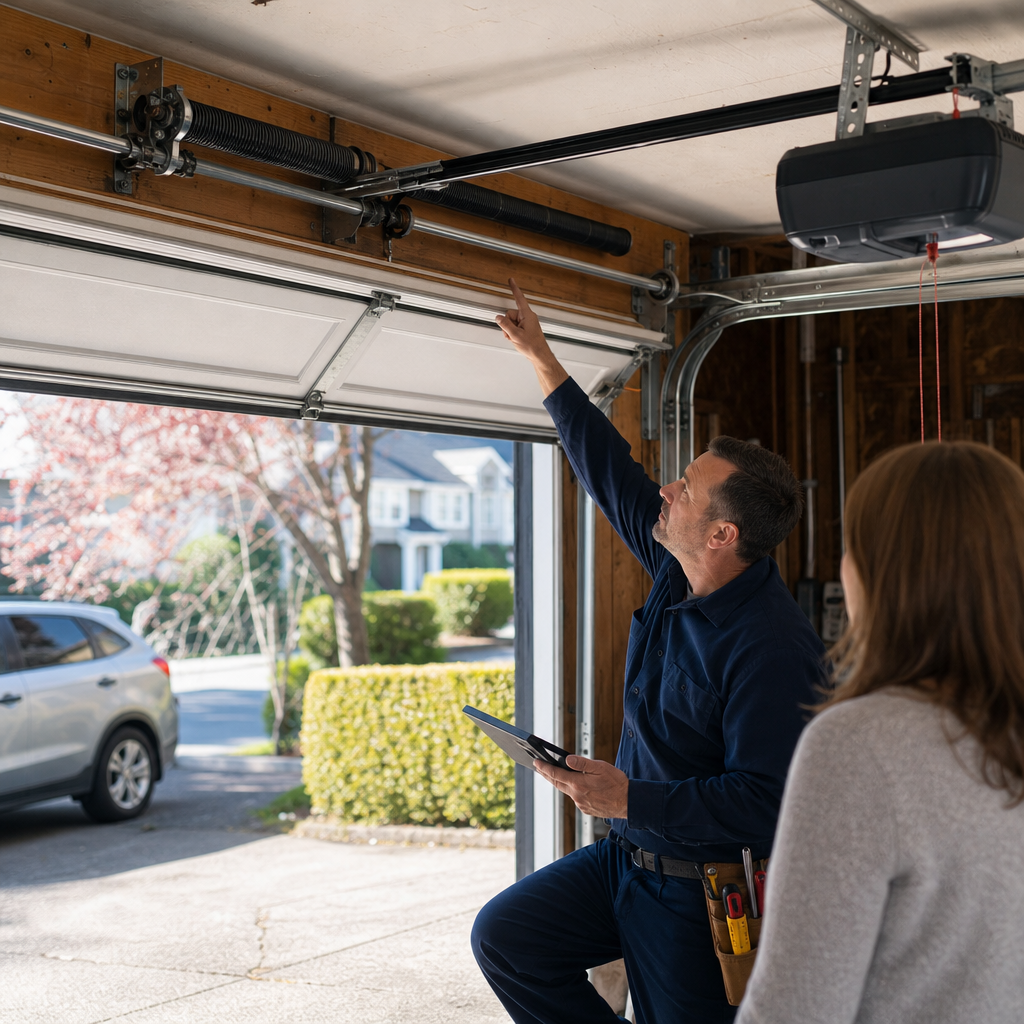
Why Does My Garage Door Reverse in Washington, WA? The Real Causes and What Actually Fixes Them
Your garage door reverses because the opener’s safety system detected something it interpreted as an obstruction — most commonly misaligned or dirty safety sensors, a close-limit switch that’s drifted out of calibration, or a force sensitivity setting that’s no longer matched to your door’s actual weight. In Washington’s damp climate, we’ve found dirty sensor lenses cause more phantom reversals than actual mechanical failures. If you’re stuck troubleshooting, call Matrix Garage Door Repair Washington at (844) 749-2402 — we’ll diagnose it over the phone or come out same-day.
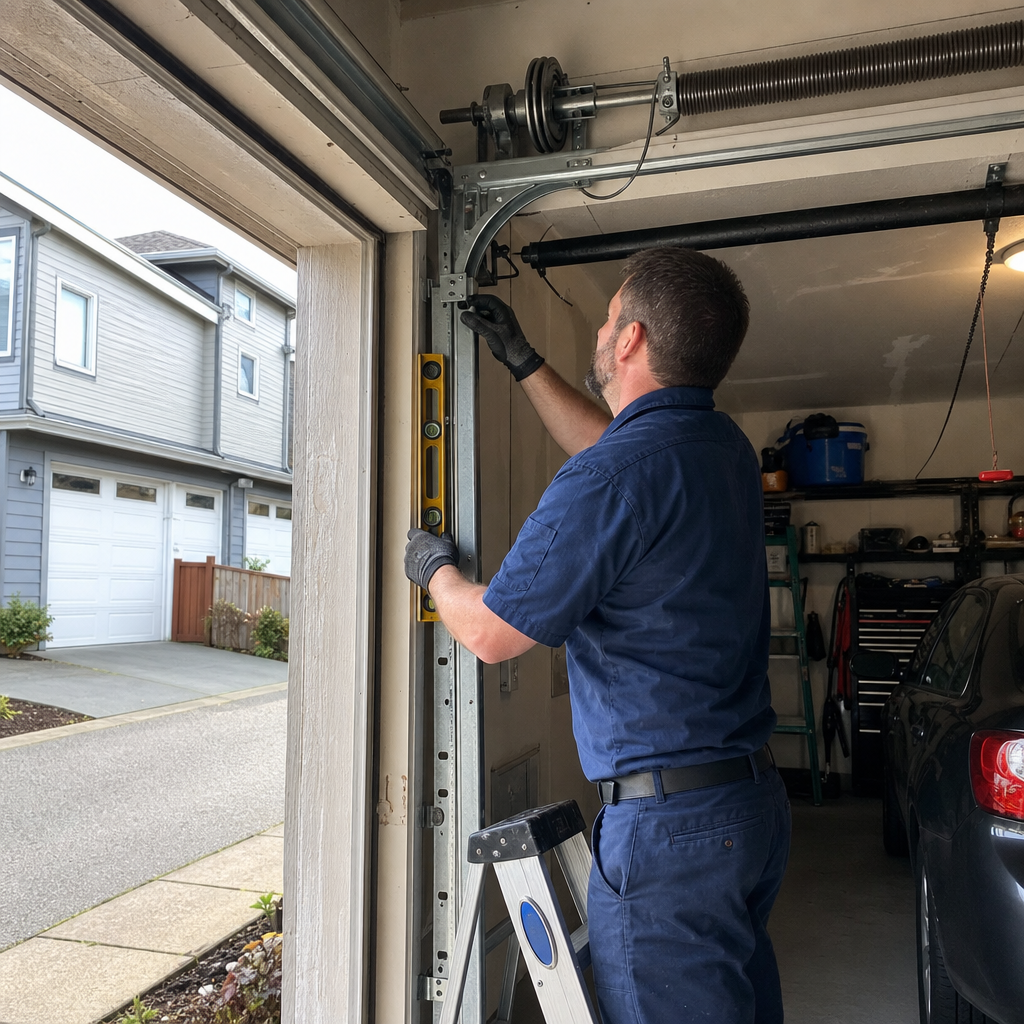
Washington’s weather patterns create a specific maintenance profile for garage doors here. The marine layer that rolls in from Puget Sound leaves a fine, persistent moisture film on everything, and that moisture traps dust, pollen, and the spider webs that seem to colonize garage corners overnight. Older homes near the Capitol Campus in Olympia — the kind I grew up around — often have detached garages with less sealing against the elements, so sensors get grimy faster. Newer construction in Lacey or Tumwater can have the opposite problem: tight weatherstripping that looks good but traps condensation against the opener electronics. Either way, when a door starts reversing for no visible reason, there’s a diagnostic sequence that separates a five-minute homeowner fix from a call to a technician.
How to Tell Sensor Problems from Real Mechanical Issues
Not all reversals mean the same thing. The opener is doing exactly what it was designed to do — stop before it hurts someone — but the signal triggering that stop ranges from trivial to dangerous. Here’s how we separate them in the field.
Safety Sensor Obstruction or Misalignment (Homeowner-Fixable)
Look for the LED indicators on each sensor bracket. On LiftMaster and Chamberlain units, one solid light and one blinking light means misalignment; both blinking usually means something’s blocking the beam path. Genie Intellicode systems flash a distinct red pattern instead. The sensors sit 4–6 inches off the floor, so in Washington garages, we’ve seen everything from a stray boot to a bag of potting soil knock one askew after a weekend project.
Realignment takes about three minutes if you know the trick: loosen the wing nut, adjust until both LEDs show solid, then tighten without bumping the bracket. The brackets are flimsier than they look — we’ve replaced hundreds that cracked from overtightening.
Dirty Sensor Lenses (The Washington-Specific Culprit)
This is the one that stumps homeowners who’ve already “checked the sensors.” The LED shows solid, the path is clear, but the door still reverses. What’s happening: the lens surface has enough grime to scatter the infrared beam without breaking it entirely. The opener reads this as intermittent obstruction.
In Washington, this hits hardest in late summer when dust mixes with morning condensation, and again in early spring when pollen counts spike. We’ve had calls from the same Tumwater neighborhood three weeks apart — same house, same fix. Clean the lenses with a dry microfiber cloth first; if there’s residue, a tiny amount of glass cleaner on the cloth (never sprayed directly) works. Check both the emitter and receiver — homeowners almost always clean one and forget the other.
Close-Limit Switch Drift (Sometimes Homeowner-Fixable)
The limit switch tells the opener how far to travel before the door is fully closed. When it drifts, the opener thinks the floor is an obstruction and reverses. On chain-drive LiftMaster and Chamberlain units, the limit screws are on the side of the motor housing — clockwise typically increases travel, counterclockwise decreases. But: if you adjust too far, the door can slam into the floor or fail to seal, creating a new problem.
We tell Washington homeowners to try this only if they’re comfortable with a screwdriver and can mark the original screw position first. If the door was working fine last month and suddenly reverses three feet from the floor, limit drift is less likely than sensors. If it reverses in the last six inches, limits are suspect.
Down-Force Sensitivity Set Too High (Technician Required)
This is where we draw a hard line on DIY. The force setting controls how much resistance the opener tolerates before reversing. Too sensitive, and thermal expansion of your door sections on a warm Washington afternoon triggers a reversal. Too insensitive, and the door won’t stop on a real obstruction — a child’s bike, a pet, a hand.
Here’s what the generic articles don’t tell you: adjusting force without knowing your door’s actual weight and balance point is guessing. A properly balanced 16-foot steel door might need 15–20 pounds of force; an unbalanced door with a weakening spring might read as “fine” on a high force setting right up until it crushes something. At Matrix Garage Door Repair Washington, Joseph Taylor calibrates force against a torque baseline measured at the torsion tube or extension spring — not by feel, not by “that seems about right.” The difference matters.
Key Takeaways:
- Both LEDs solid = sensors aligned; one or both blinking = realignment needed
- Clean sensor lenses twice yearly in Washington’s damp, dusty garage environment
- Limit switches are adjustable but easy to overshoot — mark original positions
- Force settings affect safety directly; improper calibration risks injury
- Door reversing on the way UP indicates spring/cable failure, not opener settings
Brand-Specific Reversal Logic Most Technicians Don’t Explain
Here’s where eight years of focused work shows. Not all openers reverse for the same reasons, and the owner’s manual won’t tell you everything.
LiftMaster/Chamberlain: These share the same parent company and similar diagnostic logic. The blinking light pattern on the motor unit translates directly: one blink = sensor wire disconnected, two blinks = shorted sensor wire, four blinks = misaligned or blocked sensors. The “Learn” button color matters too — purple-button units (2011–2013) have different sensitivity parameters than yellow-button units (2013–present). We’ve seen homeowners replace perfectly good sensors because they didn’t know their opener’s button color determines compatible replacement parts.
Genie: The Intellicode system has a separate “soft stop” parameter that doesn’t appear in consumer documentation. When this drifts — usually after a power fluctuation, which Washington’s winter windstorms provide plenty of — the door reverses at random points with no sensor or limit issue visible. Resetting the travel limits sometimes clears it; sometimes the logic board needs a full reprogram sequence that Genie only publishes to certified technicians. We’ve walked homeowners through the reset over the phone when it’s straightforward; we’ve made emergency calls at 10 p.m. when it’s not.
Raynor: Often relabeled Chamberlain units with proprietary rail assemblies, so the diagnostic logic applies but the physical adjustment points differ. We’ve seen “Raynor-only” service calls that were actually standard Chamberlain issues with harder-to-reach screws.
When Reversal Means Stop Using the Door Immediately
If your door reverses on the way up, that’s not an opener setting. That’s a spring system or cable tension problem, and operating the door risks catastrophic failure — a spring snapping, a cable whipping loose, or the full weight of the door dropping uncontrolled.
The opener is designed to lift a balanced door. When a torsion spring breaks or an extension cable frays and stretches, the opener strains against weight it wasn’t sized for. The safety logic reads that strain as obstruction and reverses. Continuing to cycle the door wears the opener gears and risks the spring or cable failing mid-cycle.
In Washington’s older neighborhoods — the pre-1980s homes with original wood doors — we’ve seen this exact scenario where a homeowner “got used to” the door reversing on open and kept using it for weeks. The eventual spring snap took out a window. If the door reverses going up, disengage the opener (pull the red release cord), lock the door manually if possible, and call for service. This is not a settings adjustment.
What Garage Door Reversal Repairs Cost in Washington
Most reversal issues fall into one of three cost categories. Here’s what we charge in the Washington market, based on actual 2024–2025 service calls:
| Service | Typical Range | When It Applies |
|---|---|---|
| Sensor realignment / cleaning | $0 (DIY) – $140 | Homeowner handles cleaning; we charge trip fee if you prefer we do it |
| Sensor replacement (pair) | $175–$285 | Bracket cracked, lens damaged, or wiring fault |
| Limit switch / logic board adjustment | $140–$285 | Travel or force recalibration, minor board reset |
| Opener repair (force calibration, gear replacement) | $140–$380 | Internal wear from running unbalanced door |
| Spring or cable repair (reversal-on-up) | $210–$400 | Broken torsion spring, frayed cable, failed bearing plate |
| Full opener replacement | $295–$650 | Unit beyond repair, outdated safety features |
The $175–$710 range for general Garage Door Repair covers most reversal-related calls we see in Washington. If you’re unsure which category fits, describe the symptoms when you call — we can usually narrow it before dispatch.
Joseph Taylor’s Diagnostic Sequence: What We Check First
After eight years running calls from Olympia to Lacey to Tumwater, here’s the actual order we work:
- Observe the reversal point. Three feet from floor? Six inches? Random? Pattern tells us sensor vs. limit vs. force.
- Check LED status before touching anything. Homeowners sometimes “fix” sensors into worse alignment by adjusting before looking.
- Test door balance manually. Disengage opener, lift door to waist height, release. Stays put = balanced; drifts = spring issue masking as opener problem.
- Inspect track and rollers for physical obstruction. Washington’s temperature swings can pop a roller bearing or shift track alignment.
- Measure force baseline against door weight. Never skip this. The number of “repaired” doors we’ve found with force cranked to maximum is why we check every time.
That manual balance test — step three — is the one that separates a $140 sensor cleaning from a $400 spring repair. Homeowners can do it themselves: pull the red release cord, lift the door halfway, let go. If it doesn’t stay, the spring system is compromised and no amount of opener adjustment will fix it safely.
Joseph Taylor personally leads every job at Matrix Garage Door Repair Washington. The nearly 600 customers who’ve rated us 4.8 stars aren’t reviewing a dispatch system — they’re reviewing the technician who showed up, diagnosed the problem, and fixed it without upselling. Whether it’s a broken spring at 7 a.m. or a new door installation you’ve been planning for months, we work on your brand: LiftMaster, Chamberlain, Genie, Clopay, Amarr, Wayne Dalton, Craftsman, and Raynor. 8 years, one specialty. If the door’s giving you trouble, there’s a reason — let’s find it and fix it right the first time.
FAQs
Dirty or misaligned safety sensors are the most common cause — the infrared beam gets scattered by dust, spider webs, or moisture film without being fully broken, so the opener reads an obstruction that isn’t there. In Washington’s damp garage environments, we see this more often than actual mechanical failures. Try cleaning both sensor lenses with a dry microfiber cloth and checking that both LED indicators show solid; if one blinks, realign the bracket until both steady. Call (844) 749-2402 if the problem persists — estimates are free.
Most reversal fixes in Washington run $140–$380 for opener adjustments or sensor work, or $210–$400 if the underlying cause is a spring or cable issue. Sensor cleaning costs nothing if you do it yourself; replacement sensors with installation typically fall in the $175–$285 range. The full span for garage door repair in our market is $175–$710 depending on parts and labor. We’ll diagnose over the phone when possible so you know what to expect before we dispatch — call (844) 749-2402 for an exact quote.
We don’t recommend it. The force setting controls how much resistance triggers reversal, and getting it wrong creates a real safety hazard — too high and the door won’t stop on a real obstruction; too low and every thermal expansion or slight track friction causes phantom reversals. At Matrix Garage Door Repair Washington, we calibrate force against your door’s measured weight and balance point, not by guesswork. The adjustment screws are accessible on most units, but the torque baseline isn’t something you can eyeball. If you’ve already ruled out sensors and limits, call us rather than experimenting.
Upward reversal indicates a spring system or cable tension failure, not an opener setting. The opener is straining against unbalanced weight it wasn’t designed to lift, and the safety logic interprets that strain as obstruction. This is an immediate stop-use situation — continuing to operate risks spring snap or cable failure with the door in mid-travel. Disengage the opener with the red release cord, secure the door manually if possible, and call for same-day service. In Washington’s older housing stock, we’ve seen this exact pattern precede complete spring failure within days.
If you’d rather have it looked at, Matrix Garage Door Repair Washington offers a no-pressure assessment in Washington — call (844) 749-2402.
Written by Joseph Taylor, Owner & Lead Technician at Matrix Garage Door Repair Washington, serving Washington, WA.